

How to become an online authority on a subject
‘Topic clusters’ might sound like a mountain of nutty chocolate bars - but in reality, they could be the key…
Read This Post
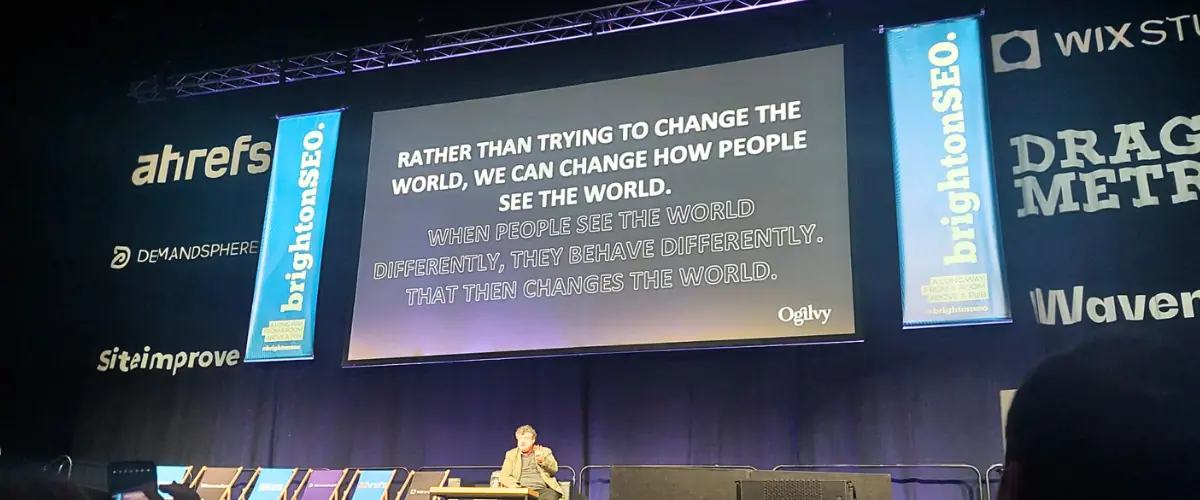
BrightonSEO has become one of the highlights of my working year – you can’t really beat learning new stuff by the beach! I think this was my favourite one yet, and after attending 28 talks over the two days, I’ve got tonnes of notes which I’m starting to work through, test out new ideas and eventually add new things into my processes.
I’ve only started attending in-person after Covid, and each time I’ve seen a bit of a running ‘theme’ for the year. The first time, everyone was talking about the metaverse and trying to work out what impact that would have (shhh..we know how that’s gone so far!). Last year, there was understandably plenty of mentions of ChatGPT. This year, the AI has matured a little, and it was great to hear of other AI tools that are worth testing out – Claude 3, Diffbot and Rufus, to name a few. TikTok was also getting it’s fair share of airtime, as speakers discussed how it could be used for keyword research, market research, or as part of a cross-channel SEO strategy – and it’ll be interesting to see how this one keeps playing out, especially with what’s going on in the US.
I got so much value out of the two days, and it’s impossible to share it all in a blog post – as much as I wish I could! Along with all the takeaways below, I’ve got a heap of practical how-tos from various talks – I’ve left them out of this post as it’d be at least five times as long as it already is! So practical walkthroughs aside, here are 36 of my favourite takeaways from BrightonSEO April 2024:
Abbie Dando – How to double your brand’s online revenue through SEO blog content
1. When you’re doing keyword research, think about what your business needs. Bigger businesses generally need higher volume keywords – but if you’re working for a smaller business, the higher intent keywords might be more important.
2. Keep the SERPs and competition in mind. You don’t need – and shouldn’t have – the same template for every piece of content. Higher volume keywords will likely need more in-depth content and supporting media than lower volume keywords.
3. Make sure you set up your tracking to measure sales and revenue coming from your blogs – this one’s easy to overlook, but makes a huge difference around how you (or your client) views the blog content!
Amanda Walls – SEO for ‘your money your life’ industries
4. Longer content doesn’t always win. You need enough high-quality content to meet the user intent – don’t feel you need to keep creating content past this point for the sake of it (this is often where the quality starts dipping!)
Anna Moragli – Cross-channel ecommerce SEO integration: boost visibility, multiply sales
5. Sales cycles are getting longer and longer – and more complex in the process! A lot of this is due to higher expectations from the customers who want to trust – and feel more connected to – the brand.
6. Each single e-commerce keyword hides its’ own funnel of keywords behind this, which map to different intents and stages of the buying funnel. To connect with customers at each stage of the journey, you need to have a cross channel approach – Anna’s talk was full of practical ideas on how best to use this keyword research across different channels.

Benjamin Szturmaj – How videos can elevate your Google rankings and improve your EEAT
7. People sharing their experiences on video is a great way to meet some of Google’s ‘high quality’ content requirements, and helps to support E-E-A-T.
8. The search data for creative video ideas is usually dreadful! You can work out where you might get results from a video by:
Trust your gut on where video content could be helpful – the data probably won’t back up your idea until you do it
9. A great little tip for businesses using Google Business Profiles. If you upload a video, it will often autoplay as the second image on your profile. This is a quick way to capture attention when someone lands on your profile.
Christopher Hofman Laursen – How to categorize keywords with Power BI and ChatGPT
10. ChatGPT often hallucinates with no context. So if you’re trying to use it for keyword clustering, you need to give it as much context as you can first. Teach it about your business, categories and keywords before you ask it to cluster keywords – then get it to do a couple for each category first to check that it understands. Christopher spoke about using both ChatGPT and Claude 3 as part of the keyword clustering process, which has got him much better results.
Dixon Jones – Writing content that search engines (and humans) can really understand
11. Part of Dixon’s talk was about entities – topics or concepts covered on your website (or your competitor’s sites, if you’re busy researching!). He had a relatable tip for deciding what’s an entity and what’s not. If there’s a Wikipedia page for the topic or concept, then it’s an entity. I’ll definitely use this analogy!
Emilio Takas – Thriving in competitive niches without backlinks
12. Start off with getting your technical SEO right before you spend lots of time/energy/budget on content and link building. Getting the technical SEO right is the foundation for the rest of your SEO to work from – without this, you could be wasting your time.
Erik Wikander – Will SEO die? The future of search and content marketing in a post AI world
13. Currently, long-tail keywords account for around 70% of all searches. Once people realise that Google isn’t stupid (ha!), this will explode – and we’ll be seeing a lot more search that’s very nuanced.
14. Europol predicted that in less than 2 years, 90% of content will be AI generated. Isn’t that a depressing statistic?! But Erik spoke about different types of AI content. The regurgitated content that we’re seeing a lot of now doesn’t add anything to the game. But with context and unique data, AI content can be created that adds a new perspective. AI should be used to amplify the current processes of creating new content – not for taking shortcuts.


Gareth Beck – 5 things you should optimise in your GTM containers
15. Analytics data is trend data – not hard data. I’ve been having this conversation a lot more with clients in the last year or so, as the switch to GA4 has made this even more obvious for many businesses. Analytics data won’t exactly match your sales data, and that’s okay – but it’s great for showing trends.
16. Optimising your Google Tag Manager account can have a big positive impact on site speed. Gareth had loads of tips for this, just a couple are:
17. If you’re using social media pixels, think about any sensitive content you might have on your site. An example given was a page where people could report a crime. If a social media company don’t need to know about it, then make sure the social pixel’s not firing on that page.
Greg Gifford – Don’t forget the basics – how a simple mini audit changed the game
I’m going to ruin my own content plan here, and mention a talk that’s gone into my ‘practical bucket’. But this was one of my favourite talks of BrightonSEO, and the first one I’ve started actioning since I got back – so I can’t do a round-up without including it!
Greg’s developed a series of local SEO scoring matrices for the industries he works with. He talked us through how they came about, and that over time they’d developed them into something that was really user-friendly, allowing businesses to score each other at meet ups, and in the process understand some of the elements that goes into local SEO.
The matrix is a really clear way of demonstrating best practice – so while just getting a better score won’t immediately bring more traffic, it does mean that the right things are in place to make the most of future SEO efforts.
I’ve already been testing out the matrix on a couple of projects and will be tweaking my own version to use for my clients.
Greg’s delivery was fab (and so fast-paced I’ll need to watch it again on the replay to catch anything I missed!)
There’s a bit more about the matrix on Greg’s blog over at SearchLab.
Right, back to the takeaways!
Leigh Buttrey – How to use GA4 to track & optimize SEO performance
Bonus quote from Leigh – “Without data, you’re just an idiot with an opinion.” 😂
18. When setting up your GA4 and GTM accounts, work your way through your sites and look for what the important events are that you want to measure. It could be clicking on a particular button, or certain form submissions. Then you can work through setting up the event tracking for these.
19. Remember that live sites are always changing and things can break. Allocate someone to checking the events and conversion at least every quarter to make sure they’re all still working as they should.
20. Compare your website analytics and hard sales data regularly. The website analytics won’t match up completely – but if the trends between them start changing, this could signify a problem with the tracking.
Lorcan Fearon – Everything I’ve learned in 5 years of doing SEO on Shopify
21. The basics are still relevant. (It’s always nice to get a reminder of this, in the midst of constant new ‘hacks’ out there!)
22. Our job as SEOs is to make the search engine’s job easy. This is a great mantra for SEO, and in Lorcan’s talk this fed back into basics like internal linking, structured data, and some specific Shopify changes from the default set up which prevented lots of unnecessary URLs getting found by Google.
23.Don’t expect any apps you use on your website to be set up correctly by default! This one’s worth keeping in mind not only for Shopify, but for other popular CMS platforms like WordPress and Magento.
Mike Fong – How to validate and audit your Google tech stack in 2024
24. Mike had a timely reminder that Consent Mode V2 kicked in in March, and that businesses should be checking that it’s activated on their website and that their cookie consent options are working as they should.
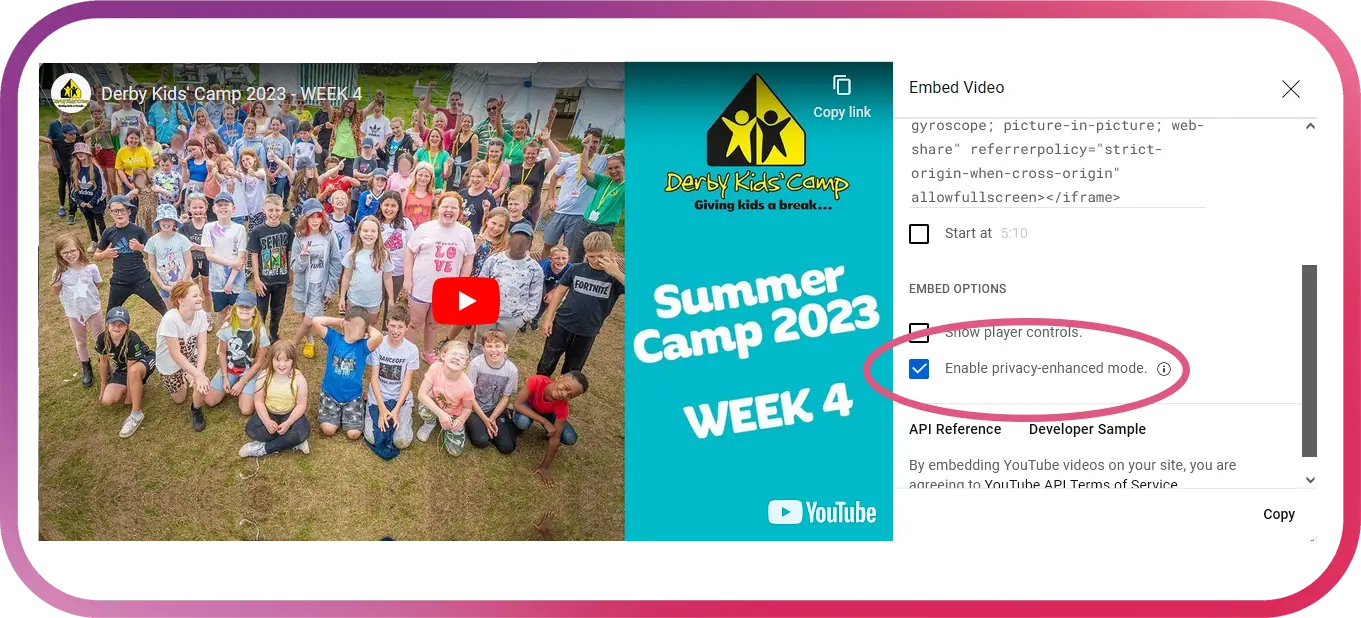
25. Embedded YouTube videos will allow marketing tags by default – but you can turn this off by ticking ‘enable privacy enhanced mode’ when you get the link for the embed.
Paul Ngoie – Crafting SEO strategies for longevity in a rapidly evolving digital landscape
26. Lots of things are changing the landscape of SEO but key principles – like relevant, quality content; keyword research and user experience – stay the same.
Rad Paluszak – From algorithmic penalty to 373% revenue increase (a case study)
27. Rad talked about using FAQ Schema to help Google understand the context of a page – even though this schema is no longer used by Google as part of the SERPs. This links back to Lorcan Fearon’s mantra of ‘make the search engine’s job easy’. While Google says this schema no longer has any benefit, many SEOs have proven that what Google says and what works aren’t necessarily the same thing! So it’s well worth testing this one out.
28. Be careful of the ‘Bucket of Death’. When recovering from a manual penalty, there’s often a small hint of the traffic increasing and then it will drop again before a stronger increase. Rad calls this the ‘Bucket of Death’. This is the vital part of recovery where you need to avoid panic – Google’s keeping an eye on whether you hold steady on the improvements made to a site, rather than you’re just trying to game the system.
Rin Hamburgh – How to leverage subject matter experts to create EEAT super content
29. Making the most of your subject matter experts is a great way to boost your site’s E-E-A-T – but working out the best way of making it work for each business can take a bit of experimentation. Rin outlines the pros and cons of the three options – writing content yourself, getting the experts to write it, or a collaborative approach. I usually use a collaborative approach and have conversations with clients which feed into content, but I’ll be taking away some ideas from Rin’s talk to play around with over the coming months.
30. If you’re interviewing a subject matter expert, send over a clear pre-brief. If they’re someone who likes to consider their answers, this gives them plenty of time to mull them over before they speak to you. I usually send over a list of questions or topics, but creating a more detailed ‘pre-brief’ is definitely something I’ll be trying out.
Rory Sutherland – Why things that work at one scale fail at another (Keynote)
31. Don’t start with the data. The majority of marketing activity will never be quantifiable before you start. Instead, begin with an investigative phase, and use the insights from this to point you in the direction of what to investigate next. Data should be used to measure results, not to justify the experiment.
32. How you display information can change the emotional response and behaviour. It’s often cheaper to solve a problem psychologically rather than technically, so try this first.
33. Sell as effectively as possible – not as efficiently as possible. It makes no sense to reduce the cost of a sale if you’re selling to less people.
Tom Mansell – Winning in competitive verticals with an evidence-based SEO strategy
34. ‘It depends’ is no longer a valid response for SEO. There’s loads of data out there that can be used for forecasting the impact that SEO will have for a business. That means that instead of vague metrics like ‘we’re going to update 100 page titles’, you can give business-relevant forecasting like £XYZ uplift in revenue.
35. Maintain a test and learn log to record the results of your experiments across sites. This will help you to develop checklists of the tactics that you know work, and also to help estimate potential traffic to feed into the forecasting.
Tom has a separate Whiteboard Friday episode here, which goes into more detail on SEO Forecasting.
Victoria Roscow – How you can outperform big brands without thousands of SKUs
36. When you’re competing with big brands on the SERPs, look for their weak points. Most of them are doing well for Domain Authority, but they get sloppy and can make mistakes – this is where the smaller brands can come in and rank highly. The weak points might be around Core Web Vitals, content or backlinks etc – analyse the SERPs for your keywords and look for the opportunities where bigger brands have slipped up to get yourself in that space.
These 36 takeaways are just some of all the fabulous tips I’ve picked up at BrightonSEO last week! I’m excited to be starting to dive in to new ideas and testing out some of these tips ahead of building them into my processes. If you were at BrightonSEO – or you’ve just taken a read of this list – I’d love to know what your top takeaways were! Drop me a message to 📨 hannah@heyyou.digital to let me know!
Take a look at some of our SEO blogs for more tips and ideas…


